How to Budget With Irregular Income
Standard monthly budgets assume the same paycheck arrives on the same day. If your income swings (freelance, gig work, commission, tips, seasonal jobs), you need a system built for the swings.
1. Find your baseline
Look at your take-home pay for the last 6–12 months and pick a low but normal month (not the worst outlier). That's your baseline. Your core budget (housing, utilities, food, transport, minimum debt payments, insurance) has to fit inside it.
2. List bills by due date, not by month
Write each bill with its amount and the day it's due. When money arrives, it pays the bills due before your next expected payment. This is "budgeting by paycheck", and it stops the classic trap where a big bill lands just before a slow week.
3. Build a buffer
Keep a holding account. Every payment goes in; you pay yourself a steady "salary" (your baseline) out of it. Aim for a buffer of at least one month of core expenses, then grow it toward several months. Good months fill the buffer; slow months draw on it.
4. Give surplus money a job in order
- Top up the buffer to its target.
- Set aside taxes if you're self-employed (see our quarterly tax guide).
- Pay down high-interest debt (see snowball vs avalanche).
- Then savings goals and fun money.
5. Review every payday
Five minutes each time money arrives: which bills does this payment cover, what's left, and is anything coming up short? Catching a shortfall two weeks early gives you options; catching it on the due date doesn't.
Our Budget & Debt Payoff Planner has a planned-vs-actual budget, so you can plan each month around your baseline and see where actual spending differs, plus a debt payoff plan (snowball or avalanche) for step 4.
General information, not financial advice.
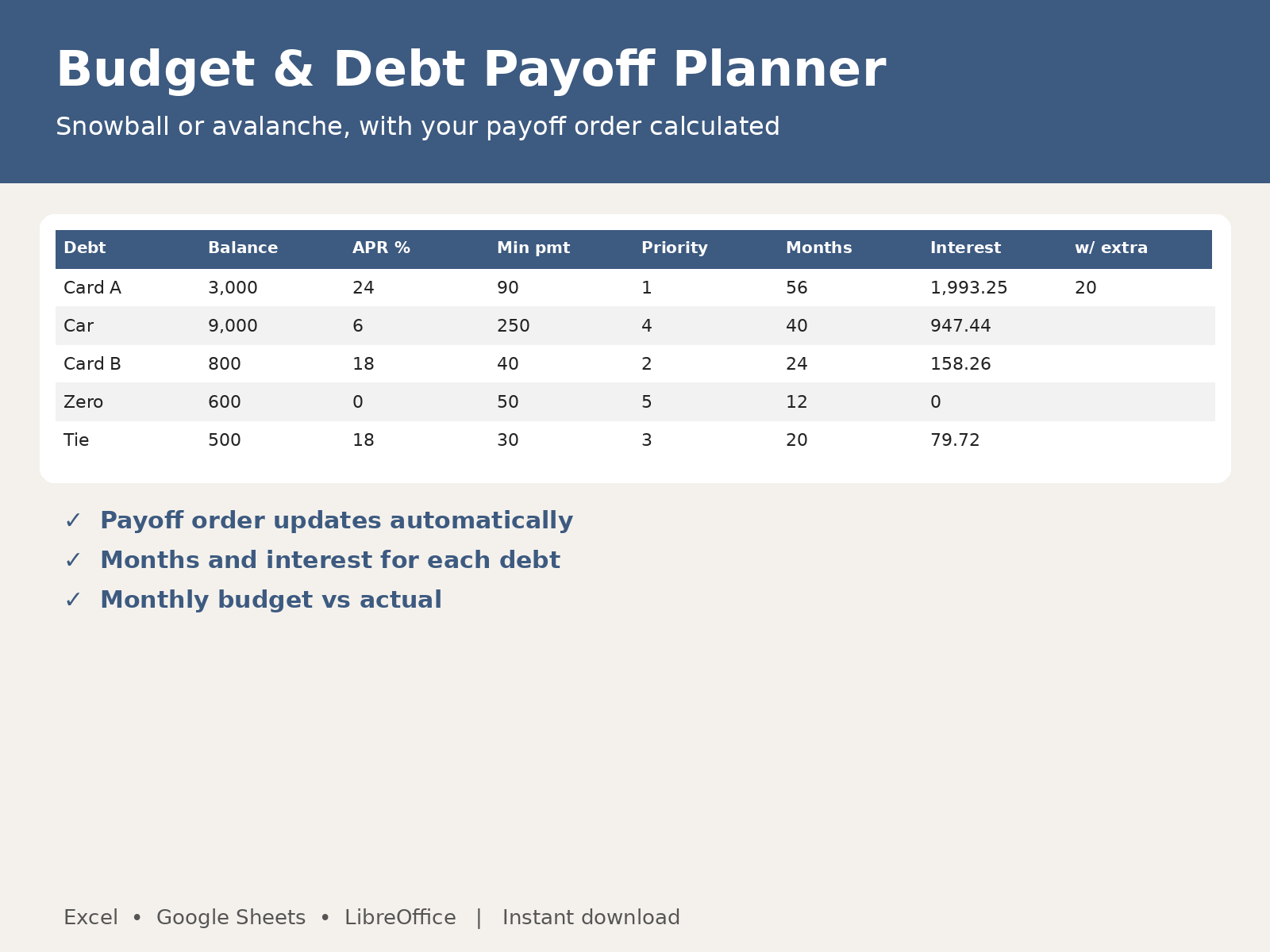
Budget & Debt Payoff Planner: do this math automatically in Excel or Google Sheets.
See the Budget & Debt Payoff Planner