What to Include on a Freelance Invoice (Checklist)
A clear invoice gets paid faster and makes your own bookkeeping easier. Here's what to put on it.
The checklist
- Your name or business name, address and contact email.
- Client's name and billing address (and a PO number if they gave you one).
- A unique invoice number. Use a simple sequence such as 2026-001, 2026-002 and never reuse one.
- Invoice date and due date (for example "Due within 14 days" plus the actual date).
- Line items: description, quantity or hours, rate, line total.
- Subtotal, any tax, and the total due.
- How to pay: bank transfer details, payment link or check address.
- Late-payment terms, if your contract includes them.
Track every invoice in one list
Keep a log of invoice number, client, amount, date sent, due date and date paid. Sort by due date each week and follow up on anything overdue. This same list doubles as your income record for taxes.
Record income when it's paid
Most US freelancers use cash-basis accounting, recording income when the money arrives rather than when the invoice is sent. Whichever you use, be consistent, and set aside part of each payment for taxes as it comes in.
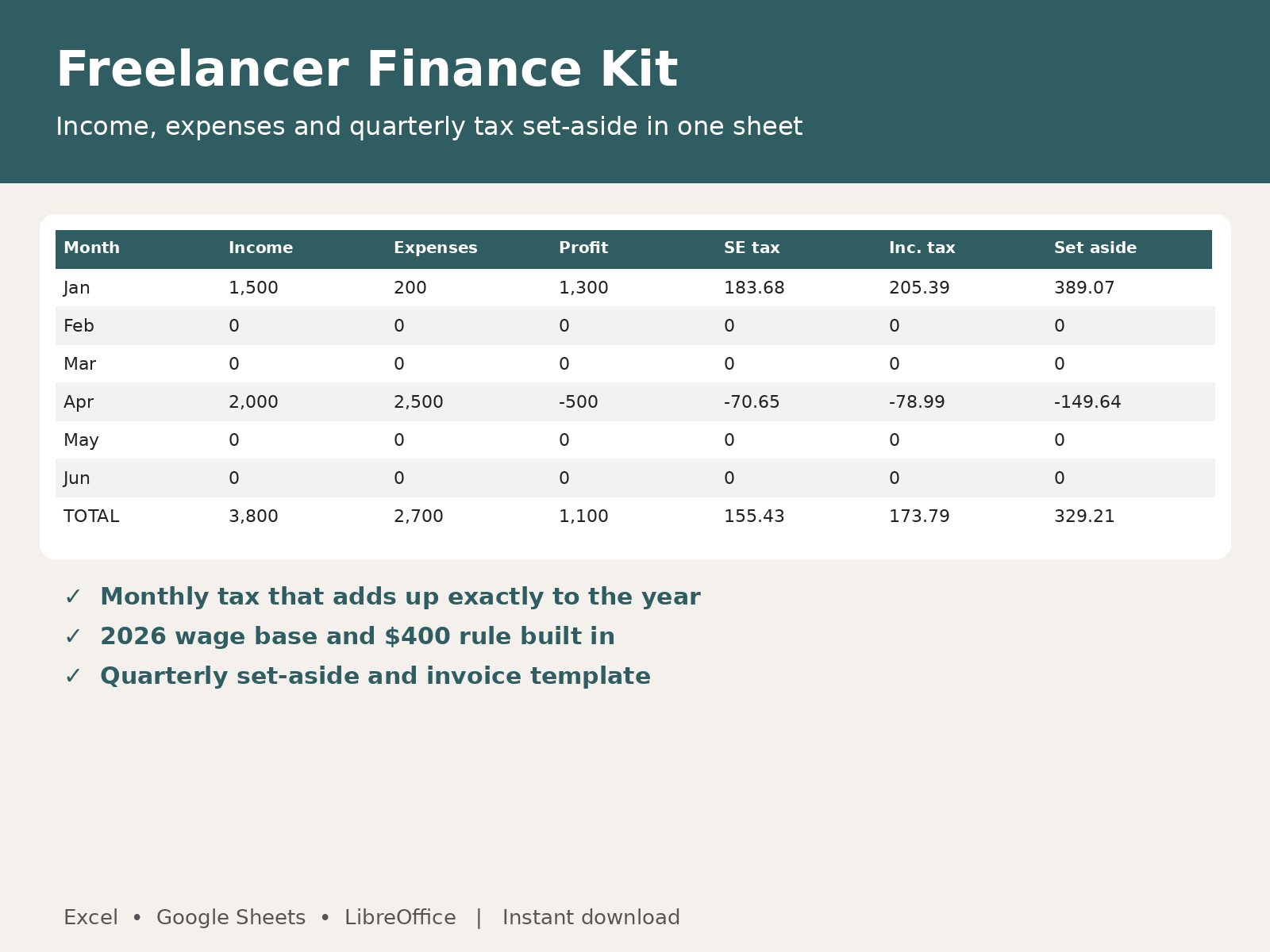
Freelancer Finance Kit: do this math automatically in Excel or Google Sheets.
See the Freelancer Finance Kit