Monthly Bookkeeping Checklist for a Small Business
Bookkeeping is far easier as a monthly habit than a once-a-year scramble. This checklist takes most very small businesses under an hour a month.
The month-end checklist
- Download your bank and card statements for every business account.
- Log every transaction: date, description, category, amount.
- Categorize consistently. Pick a category list once (sales, cost of goods, software, advertising, supplies, fees and so on) and stick to it.
- Reconcile. Your ledger's ending balance should match the statement. If it doesn't, find the missing or duplicated entry now.
- Match receipts to larger expenses and file them by month.
- Separate personal spending. If any slipped through the business account, mark it as an owner draw, not an expense.
- Review the profit-and-loss. Revenue minus expenses for the month, compared with last month.
- Set aside tax money based on the month's profit.
What to look for in the P&L
Look for categories that jumped, subscriptions you forgot, and whether margin is moving up or down. The value of a monthly P&L is spotting a problem in week 5, not month 12.
Keep a separate business account
If you do only one thing, do this. Mixing personal and business money is the main reason small-business books become hard to keep.
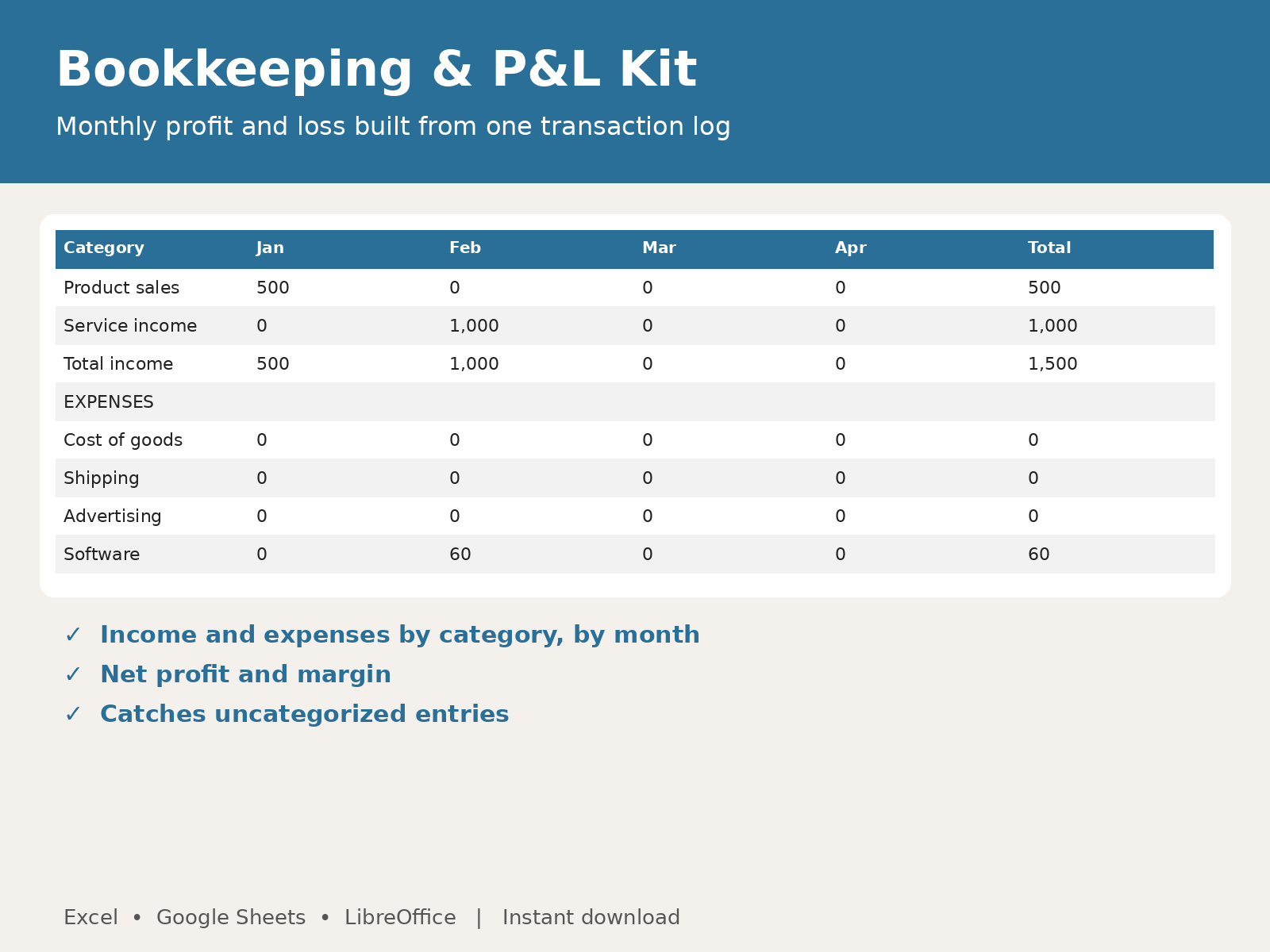
Bookkeeping & P&L Kit: do this math automatically in Excel or Google Sheets.
See the Bookkeeping & P&L Kit