A Simple Profit-and-Loss Statement for Etsy and Small Online Sellers
Sales aren't profit. A profit-and-loss statement (P&L) shows what's left after costs, month by month, and it's the fastest way to see whether a shop is working.
The structure
Income (product sales, service income, shipping you charged) − Expenses (cost of goods, platform fees, payment fees, shipping, advertising, software, supplies, contractors) = Net profit. Profit margin = net profit ÷ income.
Costs sellers often miss
- Platform and payment fees. Marketplace transaction, listing and processing fees add up; record them from your payment statements, not from memory.
- Shipping you paid versus shipping you charged. Record both, so free-shipping offers show up as a cost.
- Advertising, including marketplace ads charged per sale.
- Software and subscriptions: design tools, mockup sites, email tools.
- Refunds, recorded as negative income or a separate expense line, but consistently.
Keep one transaction log
Record every sale and expense once: date, income or expense, category, amount. The P&L is then just totals by category and month. Use the same category names every time; a misspelled category quietly drops money out of your totals.
Read it monthly
- Is margin rising or falling?
- Which expense grew fastest?
- Would a price increase of a dollar or two change the picture more than cutting a cost?
Our Bookkeeping & P&L Kit builds the monthly P&L from a single transaction log, filters it by tax year and flags any entry with a missing or misspelled category.
General information, not tax or accounting advice. Keep records your tax professional can use.
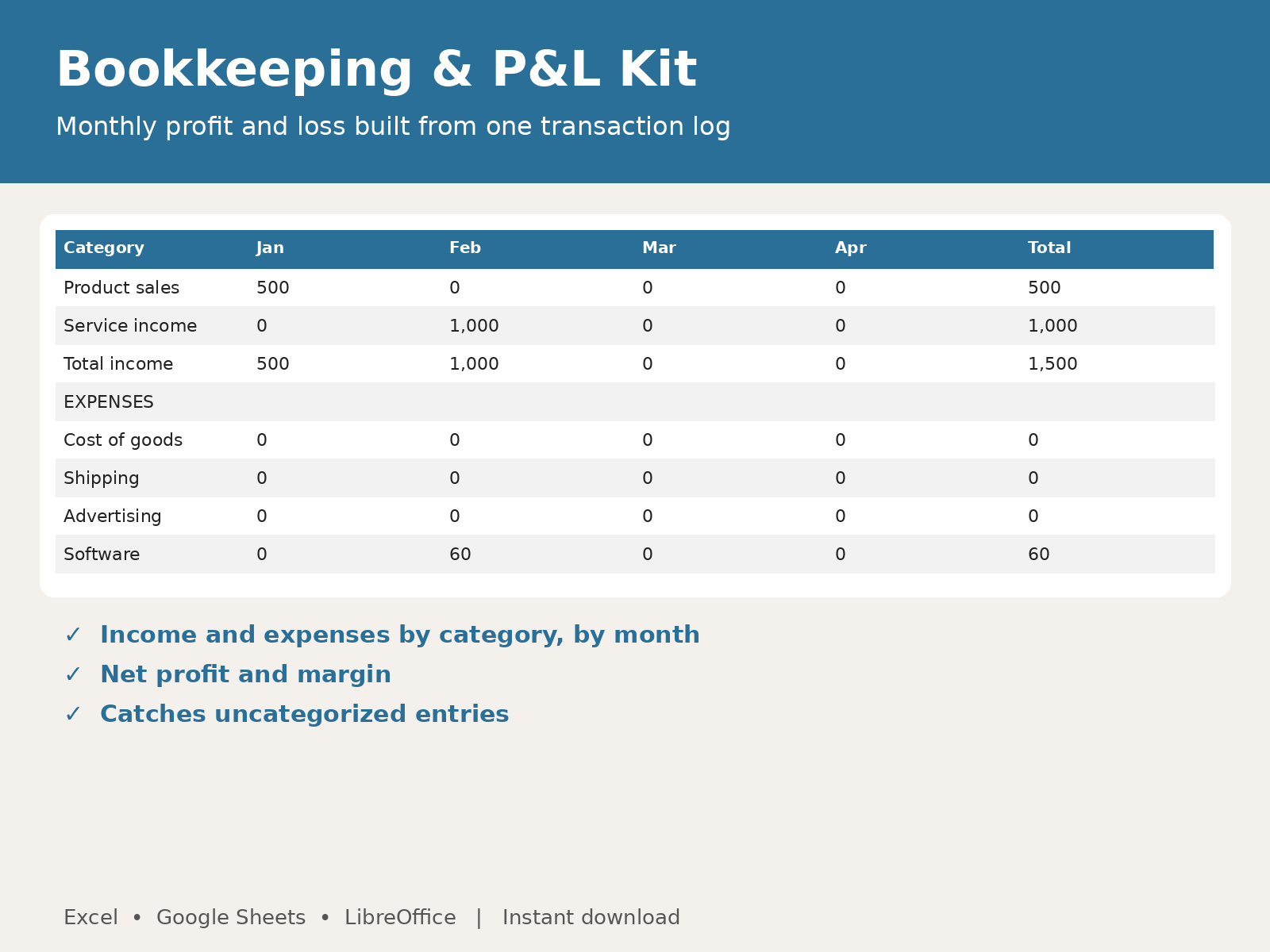
Bookkeeping & P&L Kit: do this math automatically in Excel or Google Sheets.
See the Bookkeeping & P&L Kit