Cash vs Accrual Bookkeeping for Small Businesses: Which Should You Use?
The two methods answer one question differently: when does income or an expense count? The answer changes which month shows the profit, and sometimes which tax year.
Cash basis
You record income when the money arrives and expenses when you pay them. Invoice a client in December, get paid in January, and it's January income.
- Pros: simple, and it matches your bank balance. Easy to keep in a spreadsheet.
- Cons: profit can swing month to month with payment timing, and it doesn't show what customers owe you or what you owe suppliers.
Accrual basis
You record income when you earn it, usually when you invoice or deliver, and expenses when you incur them, even if cash moves later.
- Pros: matches income to the costs that produced it, so monthly profit is more meaningful, especially with large invoices or inventory.
- Cons: more bookkeeping (receivables, payables) and a profit figure that can look healthy while the bank account is empty.
Example
A designer invoices $3,000 on March 28, gets paid April 10, and pays a $500 contractor bill for that job on April 2. Cash basis: March shows $0, April shows $2,500. Accrual basis: March shows $2,500 (the $3,000 income and the $500 cost both belong to March's work), April shows $0.
Which to choose
Many very small businesses and sole proprietors use the cash method because it's simpler, and US tax rules allow it for most small businesses. There are exceptions, for example around inventory and gross-receipts limits. Whichever method you use for taxes, apply it consistently. Changing it later can require IRS permission. IRS Publication 538 covers the rules.
Even on a cash basis, keep a separate list of unpaid invoices so you know what's coming in.
The habit matters more than the method
One transaction log, consistent categories and a monthly review will tell you more than a perfect method you only update at tax time. See a simple P&L for small sellers.
Our Bookkeeping & P&L Kit builds a monthly P&L by category from one transaction log for income and expenses, shows net profit and margin, and flags uncategorized entries.
General information, not tax or accounting advice. Ask a tax professional which method fits your business.
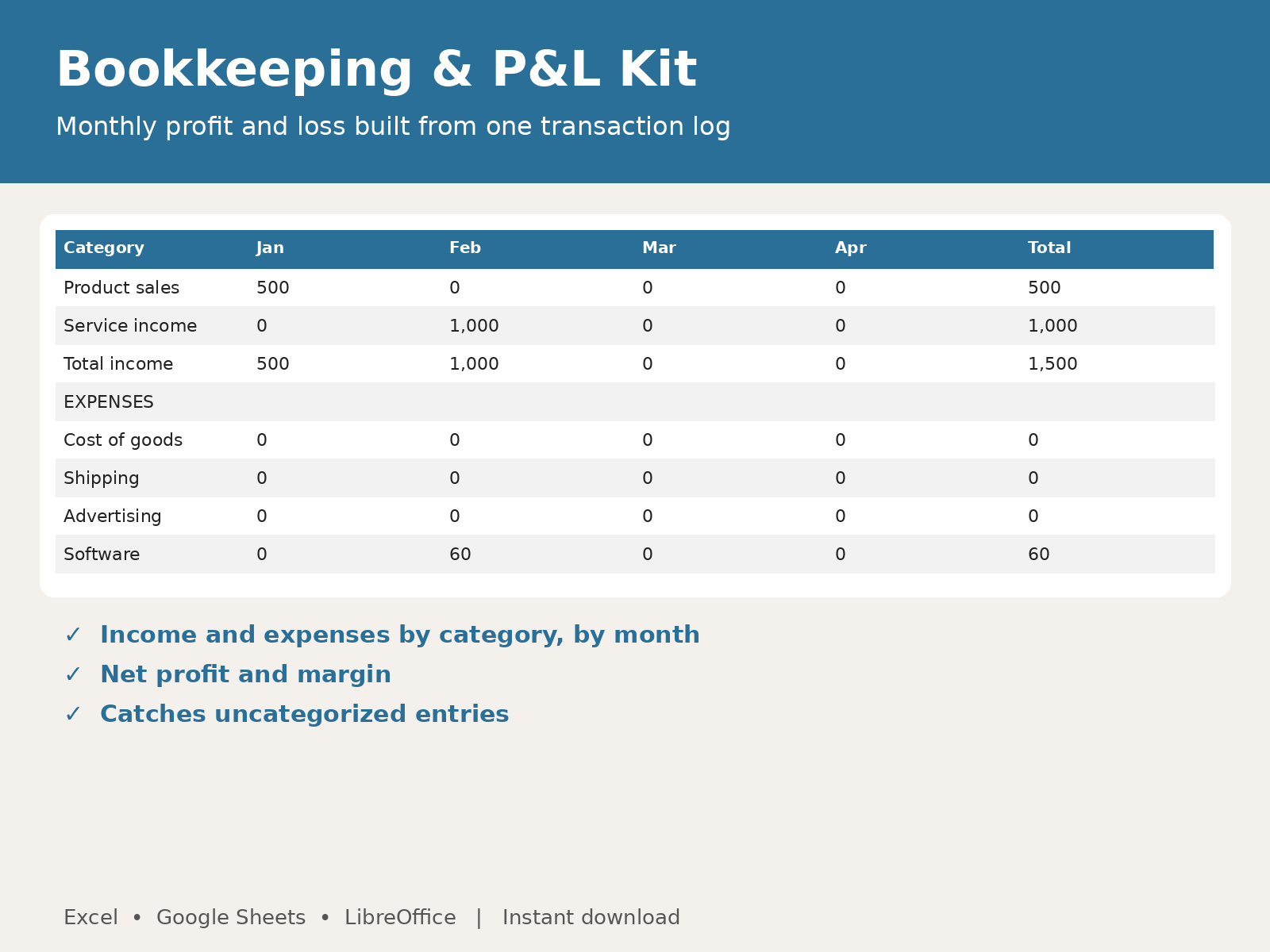
Bookkeeping & P&L Kit: instant download for Excel and Google Sheets.
Get the Bookkeeping & P&L Kit on Gumroad